

Meet Our Botanicals
Diverse landscapes. Diverse flavours.
-
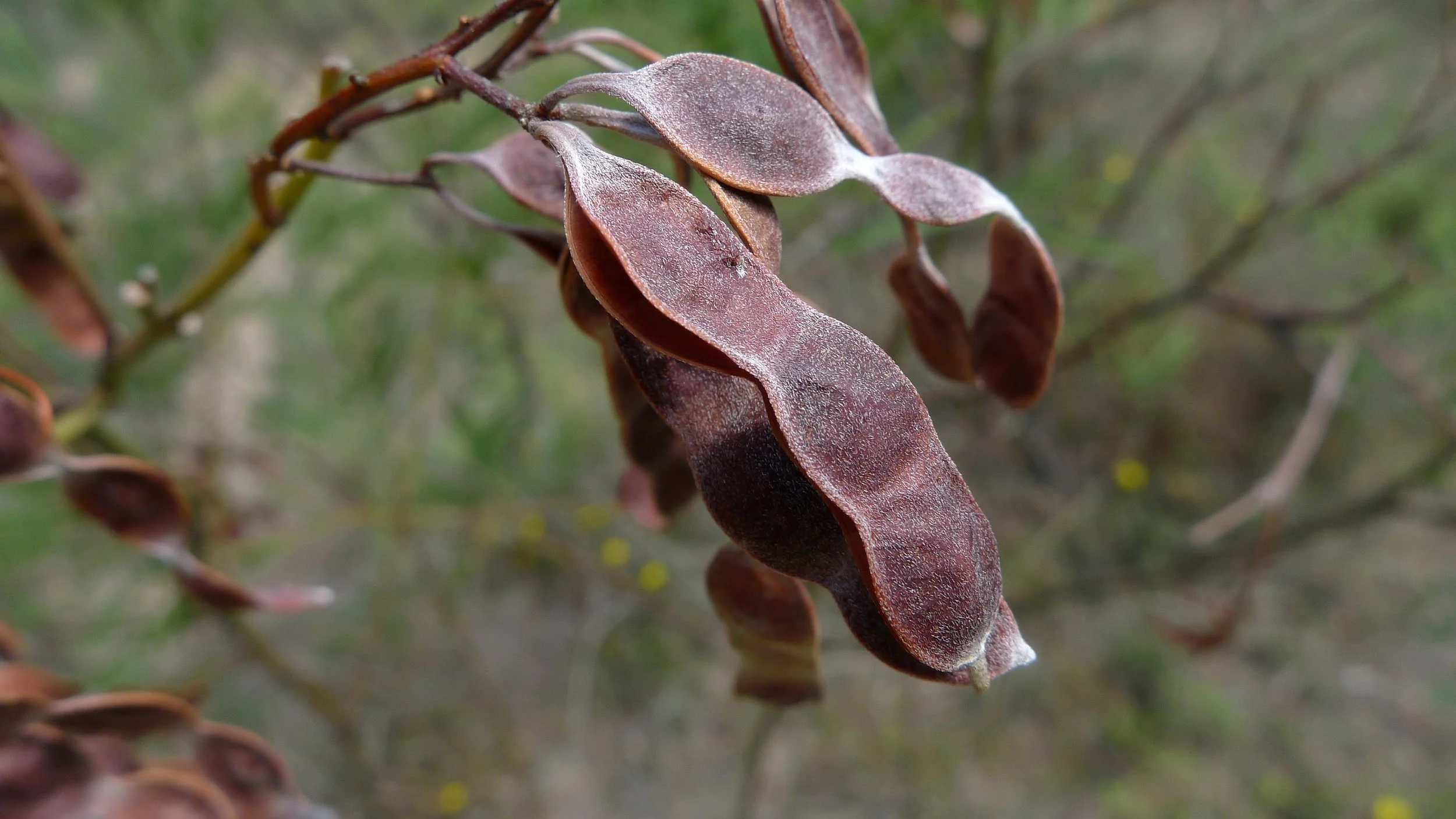
Wattleseed (primarily Acacia victoriae)
Roasted, these legumes have a nutty, cocoa-coffee flavour. Traditionally ground into flour and used as a mainstay in the traditional diets of indigenous Australians, particularly in the arid regions where they naturally grow and during times of drought. The ground roasted seed perfectly complements sweet and savoury meals, desserts, and coffee. They offer a rich source of protein, fibre and low-glycemic carbohydrates. Seed is wild-harvested by hand, threshed, then roasted and milled prior to packaging.
-
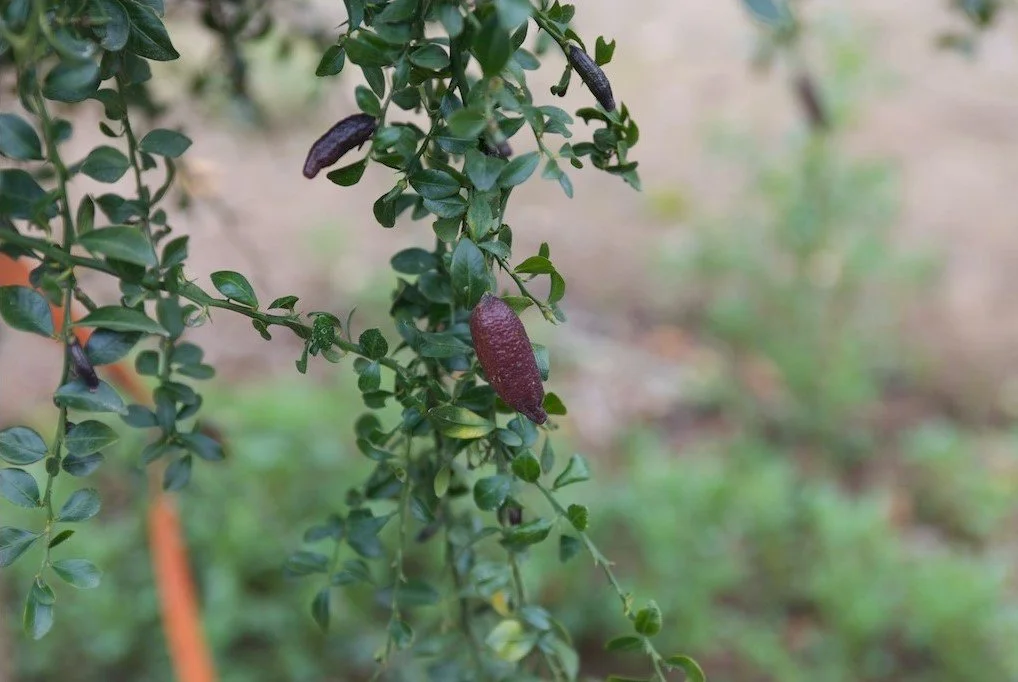
Finger lime (Citrus australasica)
The fruit of this prickly understorey shrub of subtropical rainforests contains caviar like pearls with extraordinarily high levels of Vitamin C, folate, calcium, a-Tocopherol, and lutein. They taste like lime and grapefruit which pops in your mouth like sherbert. Supply comes from dedicated orchards where fruit is hand picked and sold whole or the pulp is removed then frozen or freeze dried and crushed into powder.
-
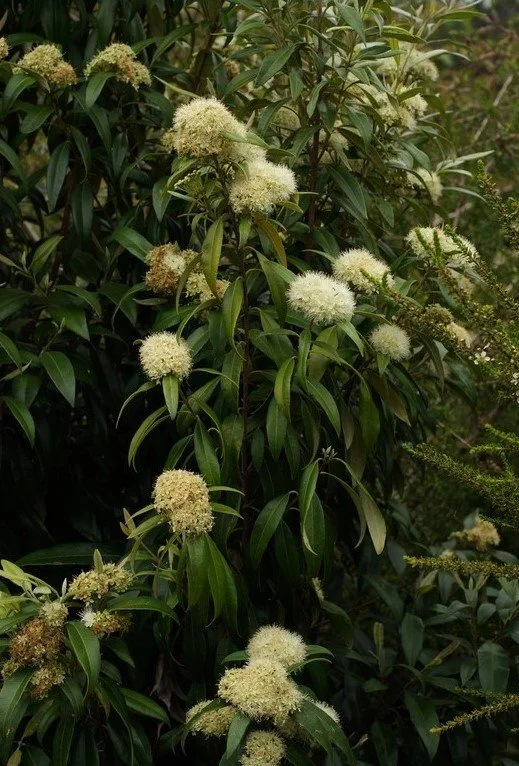
Lemon Myrtle (Backhousia citriodora)
A bright, lemony leaf with herbal undertones, plucked from a coastal, rainforest tree. Traditionally used to flavour meats and used in teas. It has the highest known concentration of citral, contains antioxidants and is non-acidic.
Leaves are hand-picked from permanent plantings from sustainable farms in northern NSW, where leaves are hand-picked, then air dried prior to packaging.
“Backhousia citriodora (Lemon myrtle)” by Tatters ✾, CC BY-SA 2.0
-
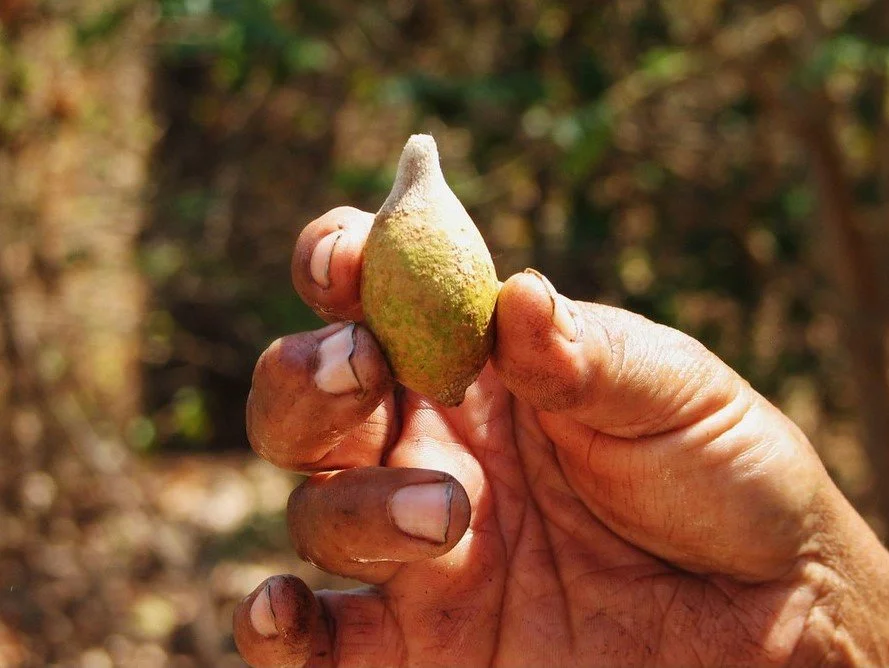
Kakadu Plum (Terminalia ferdinandiana)
The fruit of this small, creek hugging tree is tangy and sweet with hints of green apple & pear. It is exceptionally high in vitamin C. Indigenous enterprises wild harvest when the trees fruit during the late wet/early dry season. Produce is handled on-country before being packaged and distributed.
“Kakadu plum - Photo by Parks Australia” by Parks Australia, CC BY-NC-SA 2.0
-
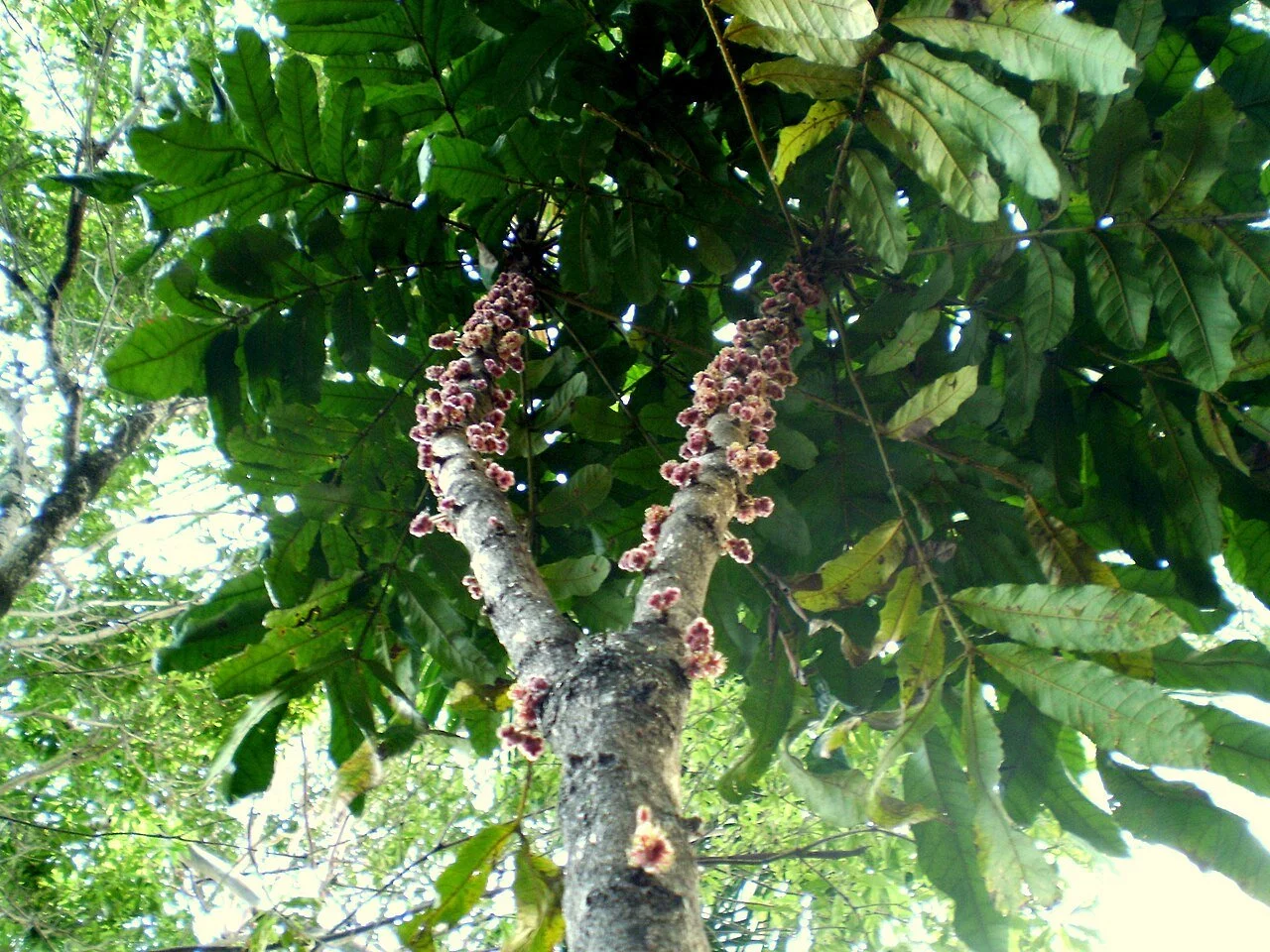
Davidson’s plum (Davidsonia jerseyana.)
A deep purple fruit from an understorey rainforest tree containing vitamin C, the antioxidant anthocyanin, vitamin E, Lutein, Folate, Zinc, Magnesium, Potassium, and Calcium. The fruit has a berry-plum flavour with a sour kick.
Supply comes from small farms which hand harvest. Wild species are protected.
By Zaareo - Own work, CC BY-SA 3.0, https://commons.wikimedia.org/w/index.php?curid=7723347
-

Pepper Leaf / Tasmanian Mountain Pepper (Tasmannia lanceolata)
Both leaf and berry of this cool-temperate rainforest shrub offer a sweet- peppery lift with a eucalyptus-clove pop. Leaves and berries contain strong antioxidants, vitamin E, lutein and iron and are a rich source of zinc, magnesium and calcium. They are sourced from both licensed wild-harvest and plantations. They are harvested by hand under sustainability guidelines.
Creative CommonsAttribution 3.0 Unported Attribution: CSIRO
-
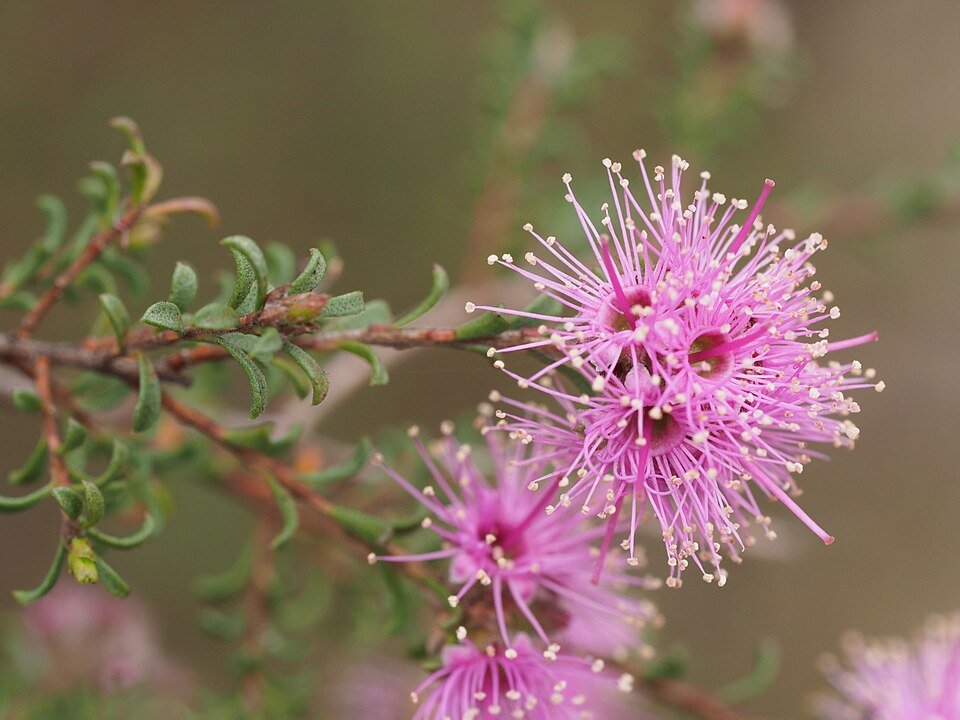
Kunzea (Kunzea ambigua)
Leaves from this small coastal heath shrub, born on wind-exposed southern coastal headlands, bring a fresh lemon-pine to any dish. It is selectively hand-picked in small culinary enterprises.
-
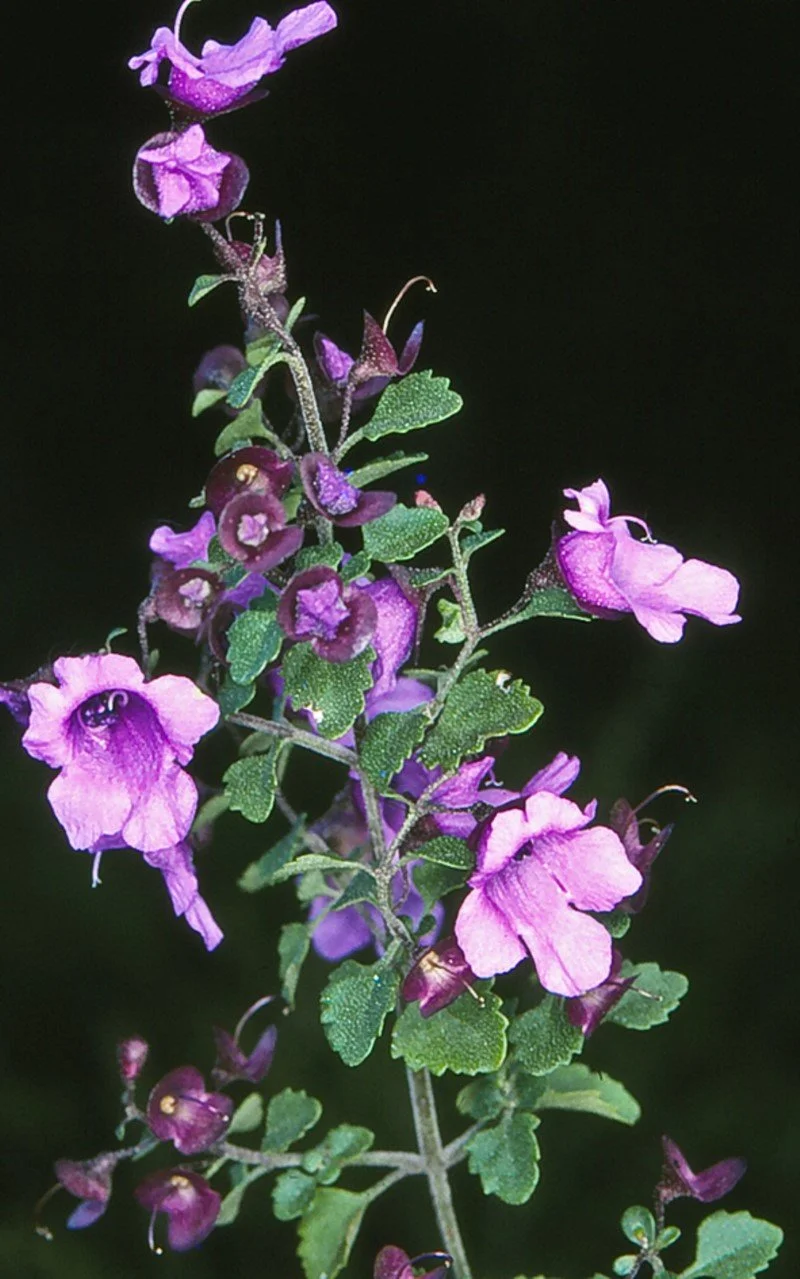
Native thyme (Prostanthera incisa / Prostanthera rotundifolia)
Small bushes growing in southern forests with rocky soils and dappled light offer up an aromatic minty taste with thyme, oregano and eucalyptus tones.
Culinary supply is from cultivated shrubs; harvest is by regular tip-pruning/leaf stripping to encourage bushy regrowth.
Image by Betty and Don Wood from https://atlasoflife.naturemapr.org/sightings/40490
-
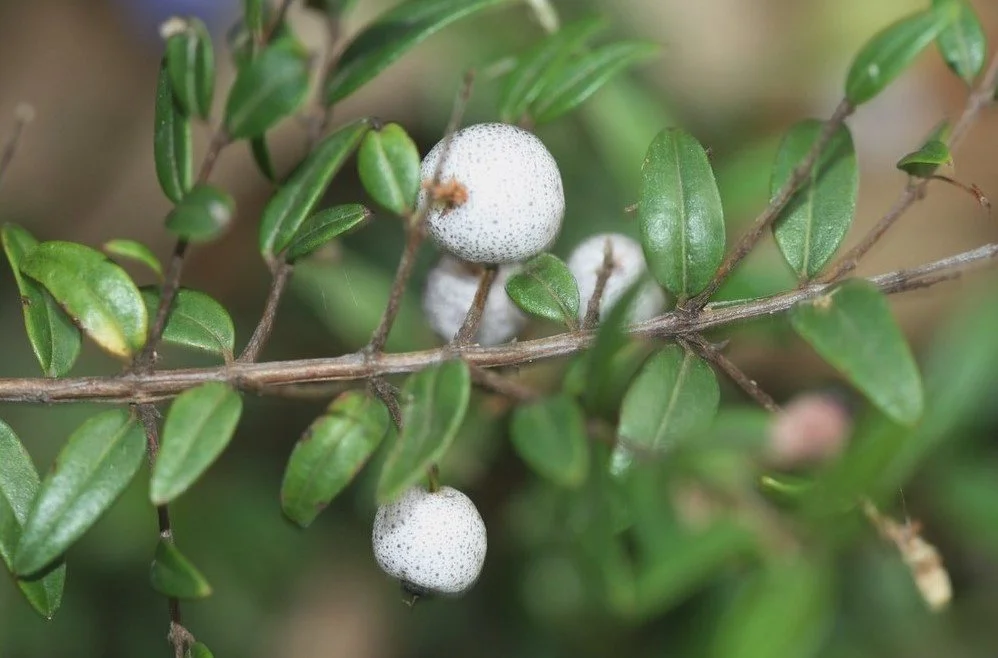
Midyim (midjim) Berry (Austromyrtus dulcis)
The berries from this low spreading coastal shrub are sweet, tasting of blueberries and spice. Fruit is hand-picked from small plantings or foraged in season due to delicate skins and sporadic yields.
“Austromyrtus dulcis (Midgen Berry) - cultivated” by Arthur Chapman, CC BY-NC-SA 2.0
-
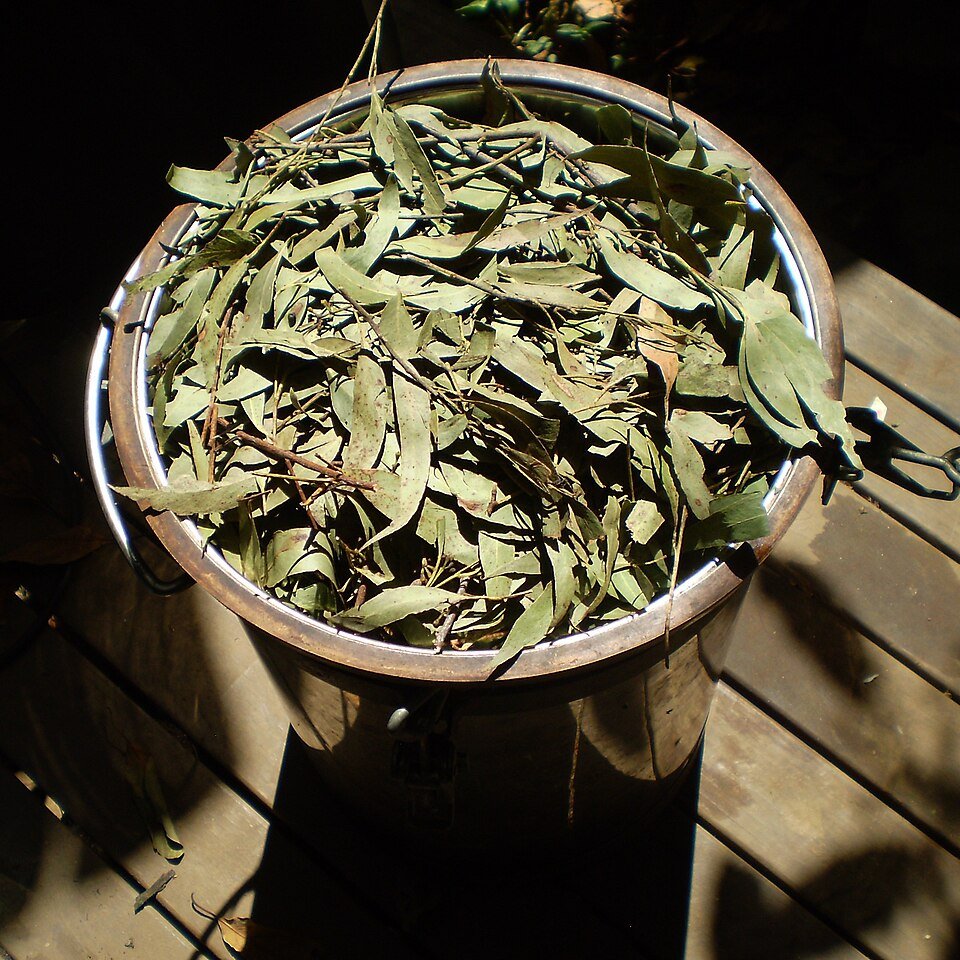
Strawberry Gum (Eucalyptus olida)
The dried leaf of this dry woodland tree is sweetly aromatic, tasting of strawberries and passion fruit, with a warm balsamic overtone. Used most often in teas, the leaf has antioxidant properties and may assist with the micro-flora of the gut.
-
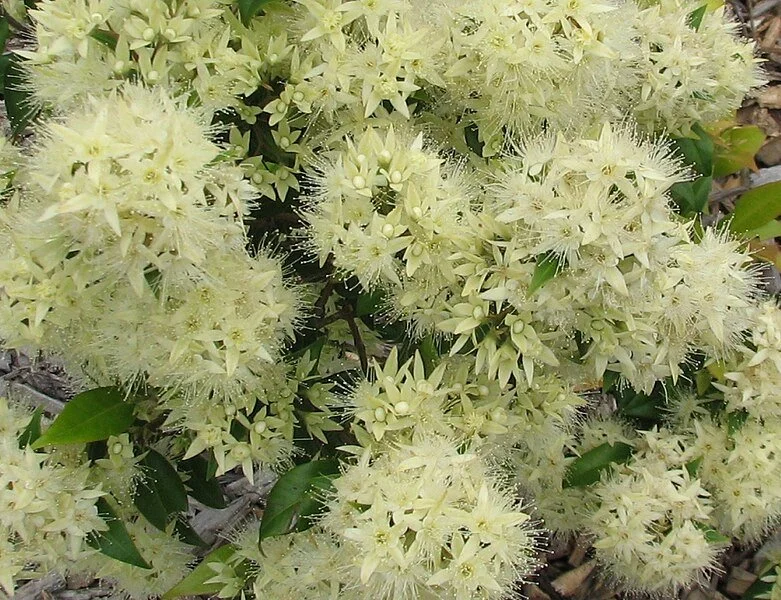
Anise myrtle (Syzygium anisatum)
The leaves of this rare subtropical rainforest tree taste distinctly of aniseed due to their anethole content. The leaves are have high in antioxidants, are rich in magnesium, and offer a good source of lutein, folate, vitamin E and vitamin C. Leaves are harvested via repeat pruning of dedicated plantations, which are then dried and packaged.
-
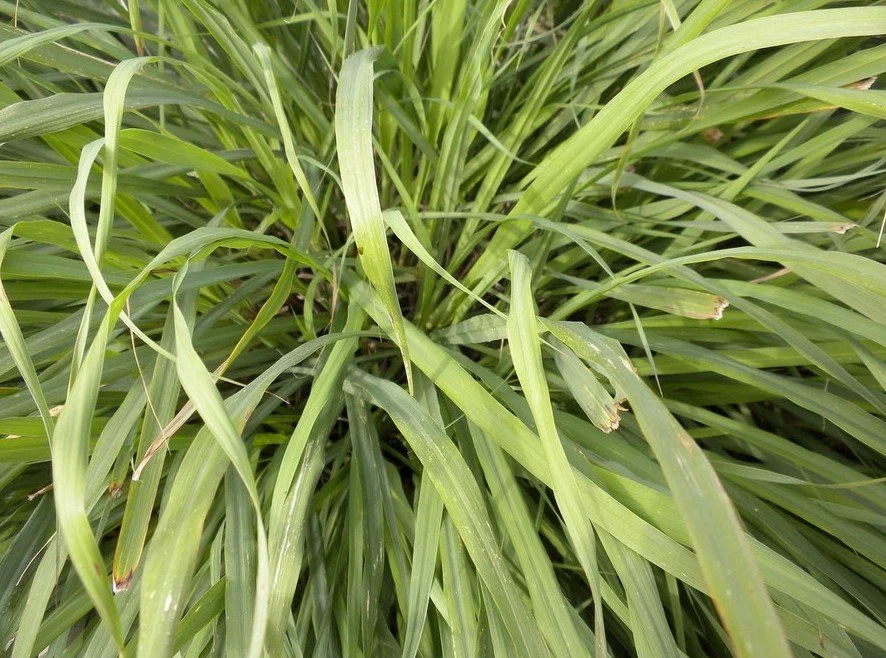
Native lemongrass (Cymbopogon ambiguus)
This tough, clumping tussock grass is widespread across inland Australia offers a gentle lemon flavour with grassy, tea-like notes. Leaves are cut from cultivated clumps (or small-scale wild stands), then used fresh or dried for tea and seasoning.
-
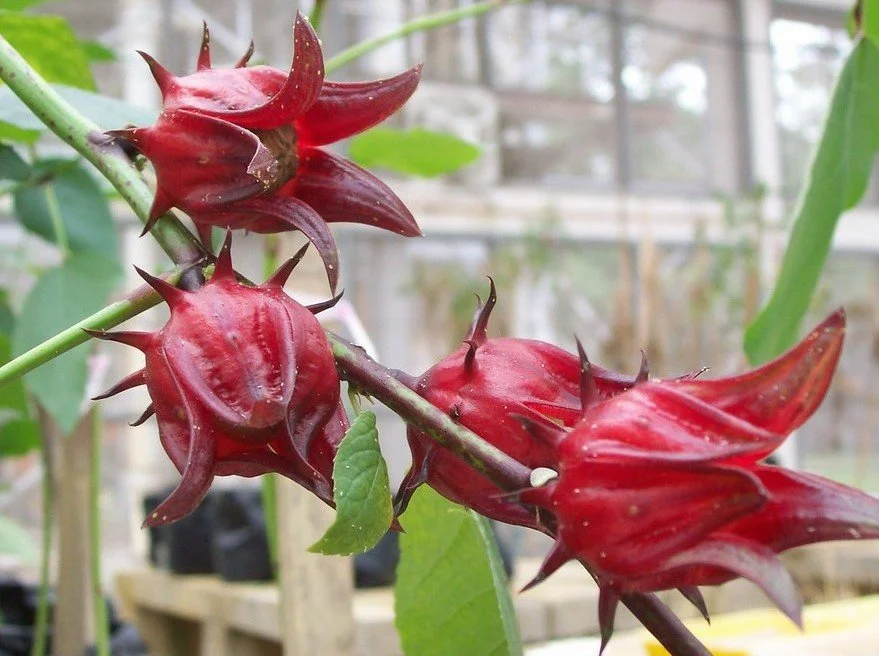
Rosella / roselle (Hibiscus sabdariffa)
The fleshy, red calyces (pre-petal structure) of this short-lived tropical shrub have a tart, cranberry-like with floral notes. The young leaves and tender shoots are all edible as well as the fruit calyx which is high in Vitamin C and antioxidants. The calyces are harvested by hand from cultivated rows when the pods swell and colour deepens.
“Rozelle” by Suresh Aru, CC BY 2.0
-
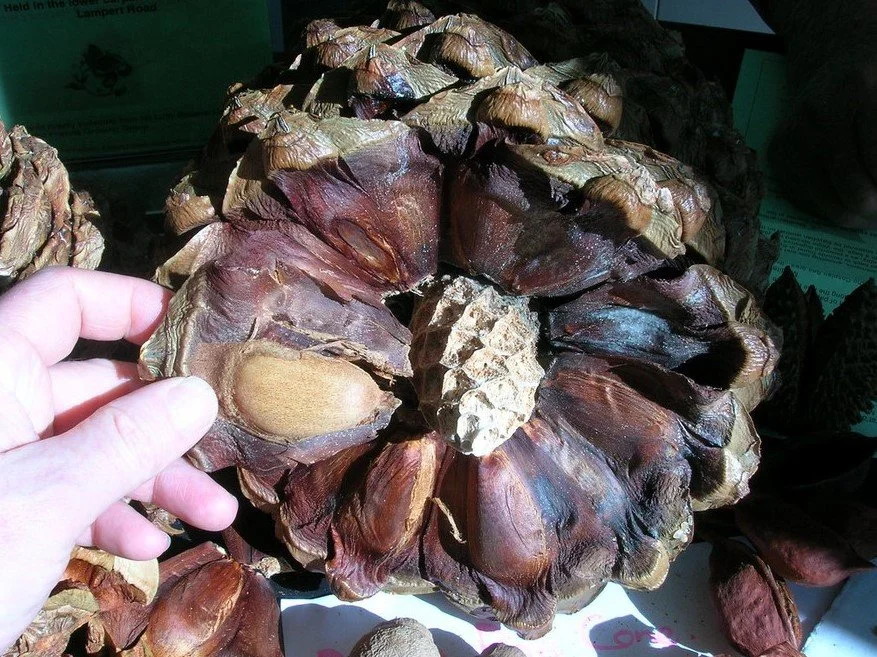
Bunya nuts (Araucaria bidwillii)
Inside the cones of this tall subtropical conifer offer starchy, mildly sweet kernels (nuts) with a chestnut-potato flavour. These kernels are rich in gluten-free, complex carbohydrates, with a healthy glycemic index rating. They also contain minerals like potassium and magnesium.
The kernels are supplied via the seasonal dropping of heavy cones which are gathered in traditional community harvests or from small farm plantings.
“Bunya Pine cone Showing Bunya nuts” by brewbooks, CC BY-SA 2.0
-

Quandong (Santalum acuminatum)
This bright scarlet fruit from the evergreen shrub offers a vibrant earthy tang tasting of rhubarb, peach or cranberry. The tree taps into the roots of nearby wattles or sheoaks to thrive in arid, sandy or stony landscapes and provide its fruit with an outstanding anti-oxidant capacity and high levels of protein, folate, vitamin C, calcium, magnesium, zinc and iron.
Quandong is still predominantly foraged from native stands, as it is difficult to cultivate in plantations. Indigenous communities gather fruit during the late spring to early summer, often employing traditional knowledge to locate and collect ripe fruit.
“DSC_1649 quandong (Santalum acuminatum) on road to Pimba, South Australia” by John Jennings, CC BY 2.0
-
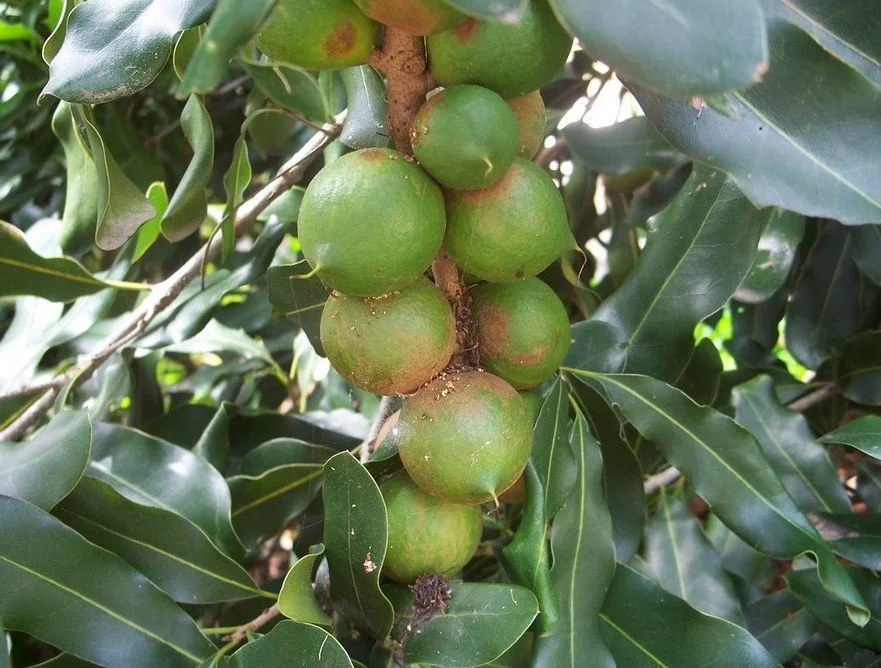
Macadamia Nuts (Macadamia integrifolia)
Macadamia Nuts are rich in vitamins, minerals, fibre and contain healthy monounsaturated fats. They are high in flavonoids and tocotrienols (antioxidants).

